
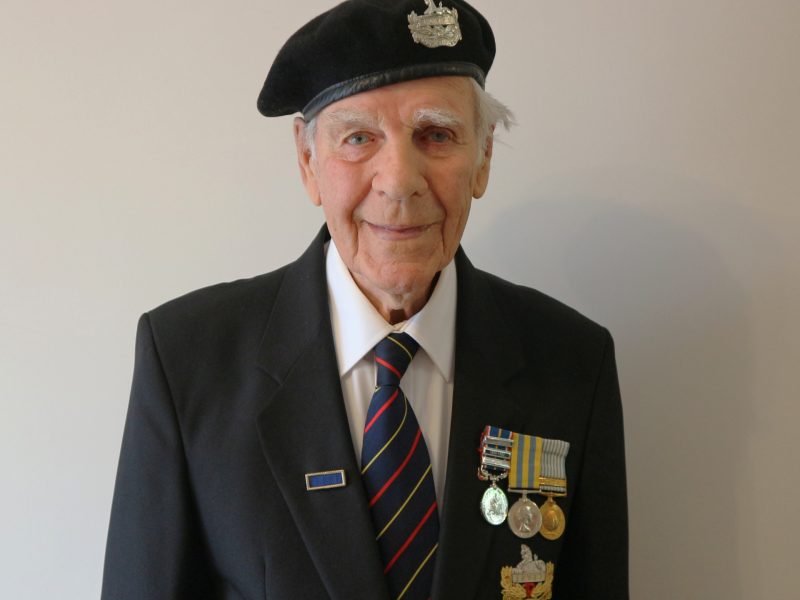
A VETERAN of the Gloucestershire Regiment’s famous stand at the Battle of Imjin River has told of his escape under fire.
Reg Portlock was an Army truck driver ferrying ammunition to and from the front line during the Korean War battle, which took place from April 22 to 25, 1951.
The Bristol-based infantry regiment helped save the city of Seoul from invasion by a huge force of Chinese soldiers.
But it came at a heavy cost, with 622 casualties among the Glosters’ 1st Battalion, including 59 men killed in action. Some 522 Glosters were taken prisoner, with 34 of them dying in captivity before war ended in 1953.
Earlier in the year Voice papers told the story of the battle to mark its 75th anniversary — and asked readers if they had any relatives who fought there.
Reg’s son John and daughter-in-law Ann, of Chipping Sodbury, saw the article and Reg, aged 94, agreed to share his memories.
Born and bred in Berkeley, Reg had worked as a driver at Sharpness docks from leaving school at 14 until he was called up for National Service at the age of 18, in 1950, and was drafted into the regiment’s motor transport section.
He said: “Just a few months in, we were told we were going to Korea.
“We were all saying, ‘where’s that?’ Nobody had heard of it.’
After arriving in Korea on the troopship Empire Windrush, Reg started making daily ammunition runs to the positions where different companies of soldiers were dug in.
He didn’t think about it at the time, but Reg’s job was highly dangerous.
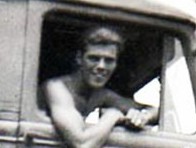
Reg said: “The lorry was full of ammunition, grenades and mortar bombs, and right at the back I had 45 gallons of napalm — any little spark and it was goodnight!”
Every day Reg drove for miles along dirt tracks from the stores, known as B Echelon, to the front lines, where his truck would be unloaded at the bottom of the hills.
Part of the United Nations force defending South Korea from the North and its Chinese allies, the Glosters were part of the larger 29th Infantry Brigade, guarding a ford over the Imjin River.
On April 22, the Chinese 63rd People’s Volunteer Army attacked and the 750 men of the 1st Battalion fought a defensive battle against more than 10,000 Chinese troops, eventually becoming surrounded on Hill 235, which would later be known as Gloster Hill.
Reg said: “When the Chinese first encircled the Glosters, we didn’t know.
“We were coming back and there was this stream we had to go through. There was an American-type ambulance, with the driver laid out of the door — he was dead.”
Reg said he and the corporal riding with him saw some people they thought were Koreans but were actually Chinese troops, who opened fire.
He said: “The corporal stood up on the passenger side and was shooting back, and I gave it some welly, so we rushed out.”
Reg believes he was the last ammunition truck driver to make it out from the battlefield.
After the battle he waited with the rest of 1st Battalion in the rear, as survivors made it out on foot.
Reg recognised himself standing next to his truck in a photo showing a roll-call of survivors, published by the Voice last month.
Soon afterwards he was sent back to the UK, where he finished his National Service and moved back to Berkeley, driving lorries for Western Transport.
He married Joyce, who died earlier this year, in 1952. They had two sons, five grandchildren and six great-grandchildren.
Reg still has his Glosters beret, the Queen’s Korea Medal, United Nations Service Medal Korea, National Service Medal and the blue ribbon of the US Presidential Unit Citation, the highest American award for heroism and collective gallantry, awarded to the 1st Battalion after the battle.
‘He was the lucky one’
MERVYN Reid, the father of Voice reader Sandra Trow, was one of the Glosters who fought at Imjin.
Born in Siston, near Pucklechurch, in 1927, he volunteered for the Army in 1944, aged 16, lying about his age to sign up.
Staying on after the end of the Second World War, Mervyn served in the 1st Division, Gloucestershire Regiment until 1953, the year the Korean War ended.
Sandra, of Yate, still has the blue ribbon of the US Presidential Unit Citation awarded to her father and his comrades after the battle, although his Korea Medal and the United Nations Service Medal Korea have been lost, along with a Purple Heart — a medal awarded by the US military to personnel wounded in combat, including soldiers from other nations serving in joint operations with Americans.
Sandra said: “He had his ankle blown up by a grenade that went off close to him.
“The force broke his ankle. He had a few screws put in, and over the years this would play up, but he always considered himself the lucky one.
“He had three best mates and he saw them all get blown up.
“I know that he fought with the Gurkhas and had total respect for them. He said if you had one in your squad, you felt safe.”
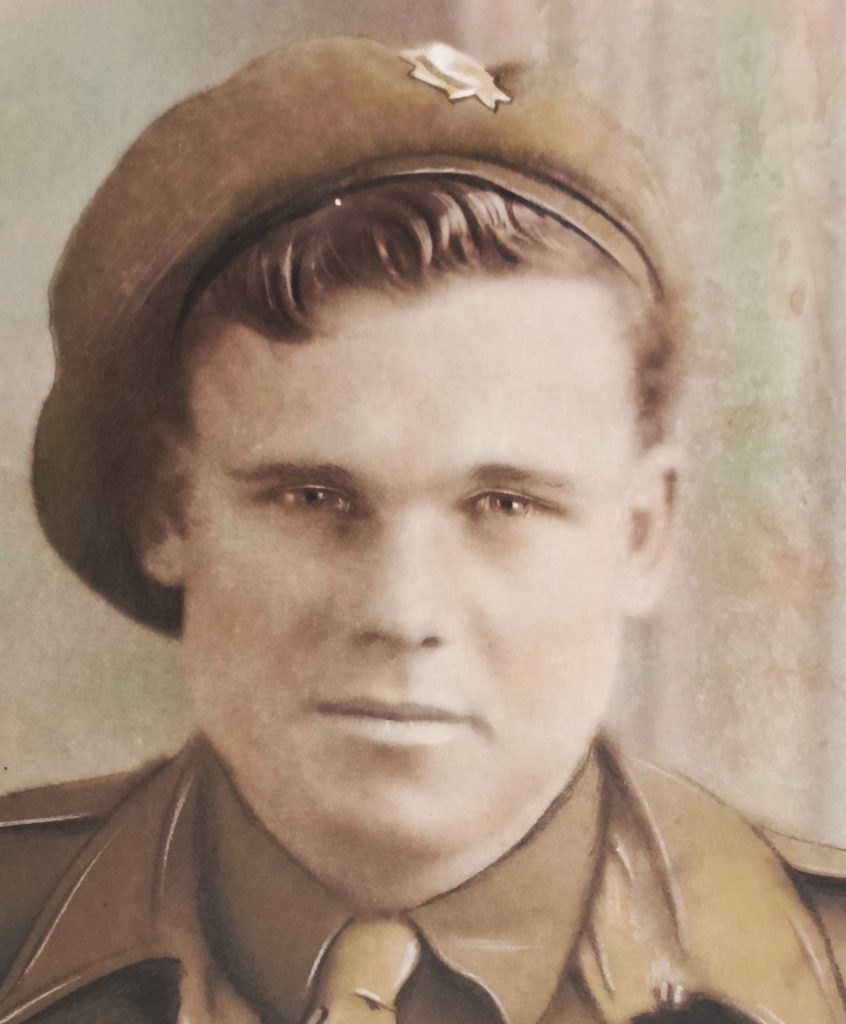
By 1952, Mervyn was back in the UK. After leaving the Army, he moved to Kingswood and worked as a builder.
Married with three children, he died in 2008, aged 80.
Mervyn’s experience in Korea stayed with him for the rest of his life.
Sandra said: “He had caught malaria, and this used to reoccur every few years in my early childhood.
“There was nothing we could do but wait for it to disperse. In those days, he would then think he was back in Korea.
“He used to tell me how cruel the North Koreans were to captives and I know he wouldn’t look at a grain of rice, saying he’d eaten too much of it.
“He was very sad about losing his mates, and would often reflect.”